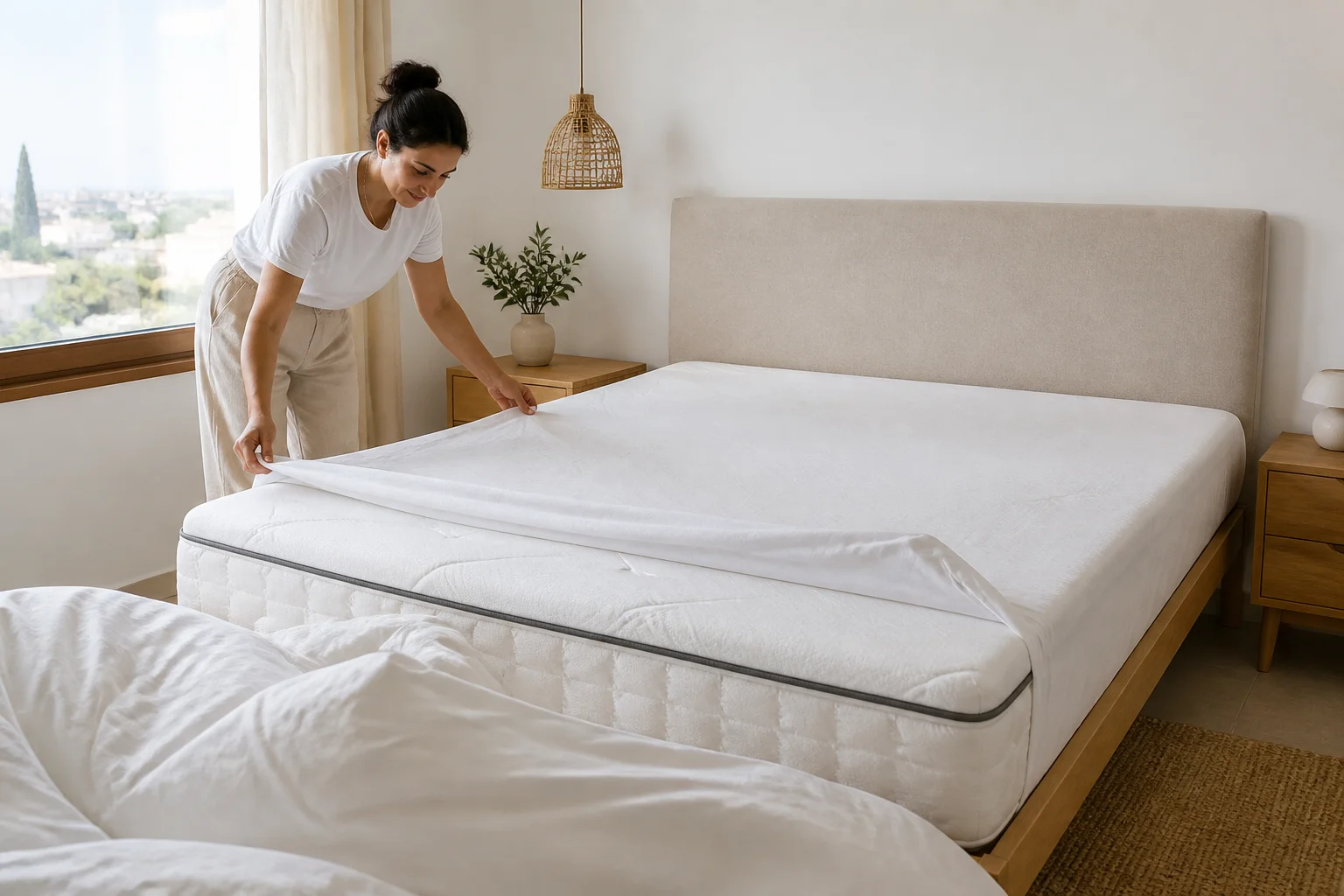
מגן מזרן ותחזוקה
How to Choose a Aminach Mattress Protector: Size, Thickness, and Stain Protection

A good mattress protector is the simple way to maintain mattress hygiene and protect against sweat, stains, and liquids. Here’s how to choose an Aminach mattress protector based on size, thickness, fabric type, and mattress connection—without guessing.
Why do you need a mattress protector (even when you have a sheet)
A sheet is meant for comfort and feel against the skin, but it doesn’t “seal” the mattress against liquids, sweat, and stains. In practice, the mattress absorbs moisture, skin cells, and dust over time—things that are very difficult to remove with home cleaning, especially when it comes to a thick mattress with comfort layers like visco/latex or Pillow Top.
A quality mattress protector performs two functions simultaneously: on one hand, it creates a waterproof protective layer against liquids, and on the other hand, it maintains a pleasant sleeping feel (not “plastic”) so you won’t want to give it up after a week.
If you’re looking for a targeted solution for Aminach mattresses, you can start with the dedicated product Aminach Mattress Protector, designed to maintain mattress hygiene and reduce damage from stains and liquids during daily use.
Choosing Size: How to Measure Correctly So the Protector Doesn’t “Slip” at Night
The most common mistake is choosing a protector based on “what looks like the size” of the bed, without measuring the mattress itself. In practice, two parameters determine compatibility: the length/width of the mattress and the height of the mattress (thickness).
Step 1: Measuring Length and Width
Measure the mattress itself from edge to edge with a measuring tape, not the bed frame. In Israel, common sizes include 140×190, 160×200, 180×200, but there are also variations (for example, 190/200 in non-standard length or width).
Step 2: Measuring Mattress Height (the most overlooked data)
The height of the mattress determines whether the skirt (the sides with elastic) will be able to “grasp” the mattress without stretching to the edge. In high mattresses with generous comfort layers, a protector that is too low will ride up, wrinkle, and expose areas at the edges—exactly where liquids tend to reach.
For example, mattresses with Pillow Top layers and advanced comfort solutions may be relatively high. If you sleep on models like Aminach Mattress Model Master, it’s especially important to pay attention to the overall height so that the protector covers the sides securely.
Thickness and Structure of the Protector: What Really Matters for Sweat and Stain Protection
When you see “thickness” in a mattress protector, it doesn’t always refer to thickness that feels like a blanket. In most cases, what matters is the structure of the layers: a pleasant top layer and a waterproof protective layer underneath it.
PU Layer: The Difference Between “Stain Resistant” and Real Protection
PU (polyurethane) is a thin and flexible layer designed to block liquid passage to the mattress. It is especially significant in homes with children, in bed drinking, or for those who suffer from night sweats. Unlike thick and noisy solutions, quality PU should be relatively quiet and not noticeably affect the feel of the mattress.
100% Cotton on Top: Comfort, Less “Heat”, More Daily Use
For a protector to be practical, it needs to feel nice like a sheet. A top layer made of cotton helps maintain a natural touch and reduces the feeling of slipping. This is especially important if you’re investing in a mattress with comfort layers designed for pressure distribution—you don’t want a protective layer that changes the feel.
In the Aminach Mattress Protector, you’ll find a combination of a waterproof PU layer and a 100% cotton top with a flexible skirt—a combination aimed precisely at protecting against sweat and stains without sacrificing comfort.
Connection to the Mattress: Surrounding Elastic, “Skirt”, and Stitching—The Details That Determine If It Will Hold
Even a protector with good raw materials will fail if it doesn’t fit well on the mattress. When a protector shifts at night, it wrinkles, exposes edges, and creates uncomfortable friction points.
What to Check in the Skirt and Elastic
- Surrounding Elastic/Flexible Skirt: A connection that surrounds the entire mattress is preferable, not just the corners. This contributes to stability over time.
- Skirt Depth Suitable for Mattress Height: Especially for high mattresses or those with Pillow Top.
- Clean and Strong Stitching: The area connecting the top and skirt is a stress point during dressing and removal for washing.
If you sleep on a mattress with reinforced edge support, you probably use the edges of the mattress a lot (sitting, getting in/out). In such a case, a protector that is not well reinforced at the edges may “climb” and shift. For example, in mattresses like Aminach Mattress Model Haraduf from the Polygav Series that emphasize stability and edge support, it’s worth giving high importance to choosing a protector that fits snugly on the sides.
Sweat Protection: How to Choose a Protector That Won’t Feel Hot or “Too Sealed”
Sweat is not a one-time event like a spilled glass of water—it’s accumulated moisture. Therefore, we want two things at once: blocking moisture from reaching the mattress and a breathable feel as much as possible above.
What Actually Helps
- Natural and Pleasant Top Layer: Cotton on top helps maintain a less warming touch.
- Tight Fit Without Wrinkles: Wrinkles create heat and friction points, increasing the feeling of “sweating”.
- Fit to the Structure of the Mattress: If your mattress includes cooling/viscogel layers, you’ll want a protector that doesn’t negate the pleasant feel with a layer that’s too thick on top.
In simple terms: a good sweat protector is one that you forget is there—but it still does the job when needed.
Protection from Stains and Liquids: What Counts as “Full Coverage” and What Doesn’t
Some protectors primarily protect the top of the mattress, while others also add significant coverage to the sides with a skirt. In most homes, liquids come not only from above: they can spill to the sides, especially if there’s movement during sleep or if the event occurs near the edge.
Questions to Check Before Purchase
- Is the waterproof protective layer located in the area where liquids actually meet the mattress (at least on the upper surface)?
- Is the skirt deep enough to stay in place even after washes?
- Is the protector fitted tightly so that “channels” that lead liquids to the edges won’t form?
Mattress Protector vs. Mattress Feel: How Not to Compromise Support and Comfort
One reason people stop using a protector is a change in lying feel: noise, slipping, or the feeling that the mattress has “become hard”. To avoid this, it’s important to match the protector to the style of the mattress and what you like to feel.
If You Like a Cradling Feel (Visco/Viscogel)
Mattresses with visco or viscogel layers are designed to allow point sinking and pressure relief. A protector that is too thick or not flexible may “flatten” the effect slightly. Therefore, it’s better to choose a protector with a flexible protective layer and a pleasant top layer that doesn’t add stiffness.
If You Like a Springy/Elastic Feel
In pocket spring mattresses or other spring systems, the goal is responsiveness and motion isolation. A quality protector should not negate this—but a protector that slips or wrinkles will indeed interfere. Here, the emphasis is on a snug fit and lack of movement.
If you’re comparing different mattresses at home (for example, a master bedroom vs. a guest room), it’s advisable to maintain the same standard of protector so that the feel remains consistent. For example, even on a mattress like Aminach Mattress Model Experience with a natural latex comfort layer, you’ll want a protector that doesn’t affect the natural elasticity of the latex and doesn’t create slipping.
A proper mattress protector is one that fits exactly to the dimensions and height, sits securely on the sides, and protects against liquids and sweat without changing the feel that made you choose the mattress.
Proper Maintenance: How to Wash, Dry, and Maintain Protection Over Time
A mattress protector works hard—therefore it also needs proper maintenance to continue sealing against liquids and not tear in the stitching and elastic areas.
Practical Guidelines
- Wash According to Manufacturer Instructions: Especially when there is a PU layer—too high a temperature or unsuitable materials can damage the seal.
- Avoid Aggressive Materials: Bleaches and strong stain removers may shorten the life of the sealing layer.
- Moderate Drying: High heat can damage flexibility. If drying, it’s better to use a gentle program according to instructions.
- Two Protectors in Rotation: Especially practical for families—one on the bed and one clean in the closet, so you’re not left without protection on laundry day.
When to Replace a Mattress Protector: Signs Not to Ignore
A mattress protector is a consumable product. Even if it looks “fine”, the sealing and elasticity can weaken over time.
Replace the Protector If You Notice
- The Elastic Has Loosened and the protector starts to shift or rise at the edges.
- Cracks/Fraying in the inner layer (sometimes it will appear as fine peeling or hard areas).
- Stains That Don’t Come Out and Accumulating Odor even after washing—indicating that moisture has already “settled” inside the materials.
- Tears in the Seams in the areas connecting the skirt.
If you’re investing in a quality mattress, timely replacement of the protector is one of the inexpensive ways to keep the mattress clean for years.
Quick Selection by Need: Who Needs What
If the Main Goal is Daily Sweat Protection
Look for a protector with a pleasant top (like cotton) and a flexible PU layer, in the exact size and with a skirt height that fits your mattress—so that wrinkles and heat don’t form.
If the Goal is Protection from Liquids and Stains (Children/Pets/Drinking in Bed)
Prioritize true waterproofing and a stable connection that covers the sides well. Here, “perfect sitting” on the mattress is just as important as the material itself.
If You Are Sensitive to Noise or the “Plastic” Feel
Choose a protector that emphasizes a natural and pleasant top layer and is intended for daily use, and ensure proper stretching over the mattress to prevent friction and wrinkles.
Summary and Practical Purchase Recommendation
To choose a Aminach Mattress Protector that fits exactly what you’re looking for—size, thickness, and protection from sweat and stains—we recommend working in order: first measure length/width and height, then check the layer structure (pleasant top + PU layer), and finally ensure the skirt and elastic sit securely.
If you want a targeted solution aimed at maintaining mattress hygiene and protecting against liquids and stains in daily life, check out the Aminach Mattress Protector. After you choose the correct size and ensure it fits the height of the mattress, you’ll receive daily protection without compromising the sleep feel you’re not willing to give up.