
מגן מזרן ותחזוקה
How to Maintain a New Mattress: Proper Cleaning and Protection with a Mattress Protector
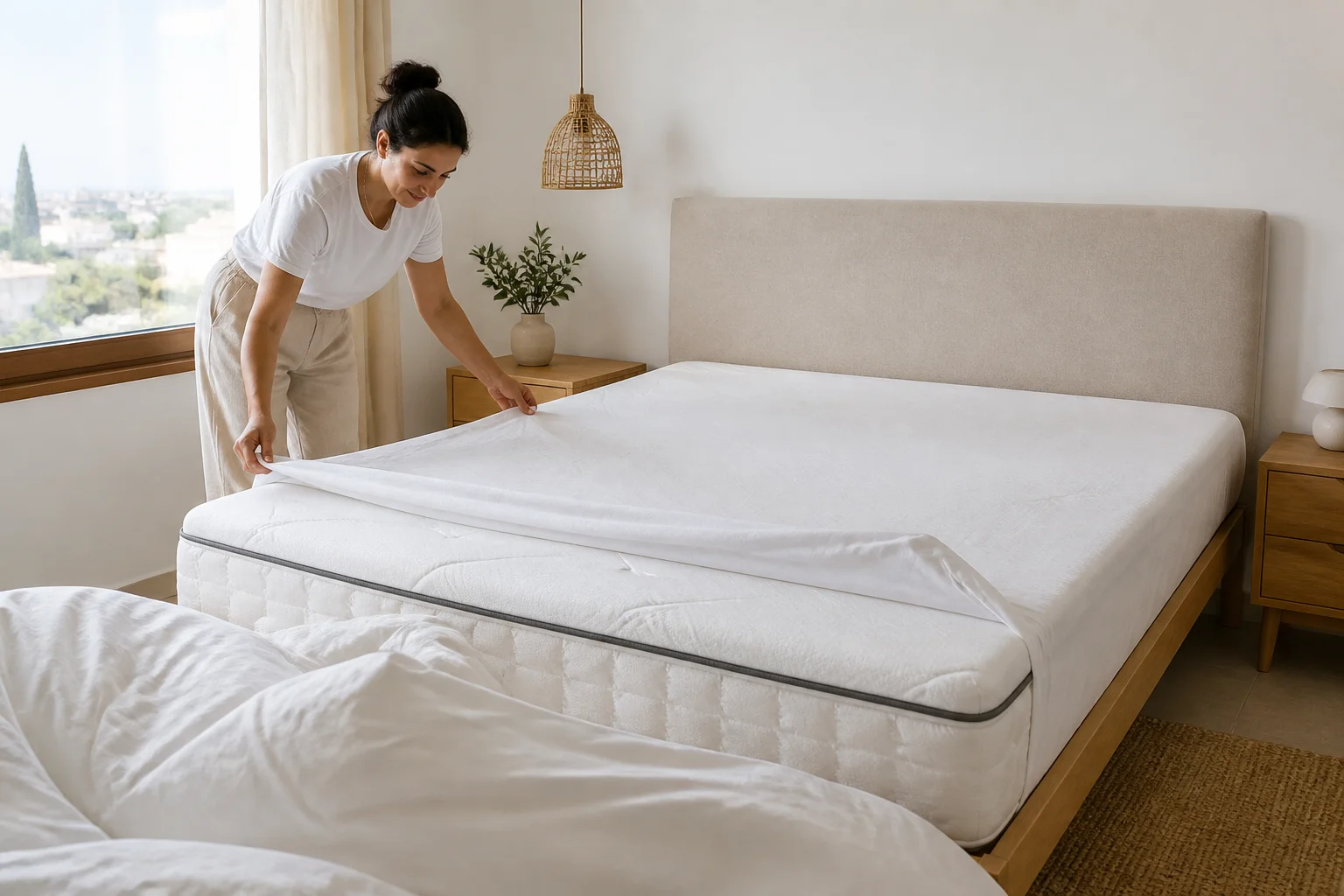
A new mattress is an investment for years—but stains, odors, and moisture can shorten its life quickly. Here’s how to establish a cleaning and protection routine at home, and when a mattress protector is a must.
A new mattress feels like a "clean start"—but in reality, from the very first night, it begins to accumulate moisture from the body, dust, skin cells, and sometimes even small stains that are hard to notice in real-time. The good news: with a simple (and not complicated) maintenance routine, you can significantly reduce the chances of stains and odors, maintain a feeling of freshness, and slow down the wear of the comfort layers.
In this guide, we’ll translate this into practice: how to clean properly at home without damaging the mattress materials, how to air it out, what to do when there’s a stain, and where exactly a mattress protector fits into the routine—especially if there are children, pets, or a tendency to sweat.
Why do you even need a maintenance routine for a new mattress?
A mattress is made up of layers: an outer fabric, comfort layers (visco/visco gel, latex, polyurethane, Pillow Top), and sometimes a spring system (like pocket springs). Each layer reacts differently to moisture, heat, and cleaning agents. Therefore, good maintenance is not "just another chore," but a way to preserve the performance you felt in the store: support, ventilation, and a feeling of cleanliness.
Two factors accelerate wear at home: (1) moisture and odors that get absorbed into the layers, (2) stains and liquids that penetrate inside. This is exactly where a quality mattress protector makes a difference, as it blocks liquid penetration and reduces dirt absorption.
In principle, a mattress protector is designed to protect the mattress and extend its lifespan—this is also described on IKEA's product page for the mattress protector ROSENVIAL.
The Basics: 5 Weekly Habits to Keep a Mattress "Like New"
We recommend thinking of maintenance as a short routine of 10–15 minutes a week. No special equipment is needed, just consistency.
- Air out bedding in the morning: leave the blanket open for 15–30 minutes before making the bed to allow moisture to evaporate.
- Gentle vacuuming once a week to every two weeks: if possible, vacuum the surface of the mattress (or the mattress protector) with a soft brush. This reduces dust and particles.
- Regular bedding changes: especially in summer/sweating. Clean bedding reduces the dirt load that reaches the mattress.
- Rotate/flip according to the type of mattress: if the mattress is a One Side System (one side), do not flip—but you can rotate head-to-foot occasionally to distribute loads. If there are two sides, follow the manufacturer's instructions.
- Quick check for stains/moisture: early detection = easier cleaning, and less penetration into the layers.
Mattress Protector: When is it a Must and When is it “Highly Recommended”
There are situations where a mattress protector is not an "addition" but a basic layer of protection. The reason is simple: liquid that enters the layers (visco/latex/polyurethane or Pillow Top layers) is very difficult to completely remove and can leave a smell or mark even after cleaning.
When do we consider it a must?
- Small children: accidents, spilled water bottles, excessive sweating.
- Pets: dirt, fur, and sometimes accidents.
- Tendency to sweat/heat at night: moisture accumulates over time.
- Eating/drinking in bed: “just one coffee” is a recipe for a stain.
- Allergies/sensitivity to dust: a protector creates a layer that is easy to wash and maintain.
What to look for in a mattress protector to ensure it really works
There is a difference between a "thin" protector that feels like an additional sheet and a protector that provides real liquid blocking. Check the specifications: a waterproof layer (usually PU), a pleasant top fabric (usually cotton), and a skirt/rubber that holds the protector in place.
For example, Aminach Mattress Protector is described as a Premium protector with a PU waterproof layer for liquids and stains, a top made of 100% cotton, and a flexible skirt—a combination that is precisely aimed at a home routine: comfort to the touch + practical protection.
A quality mattress protector prevents liquid, dust, and allergen penetration and helps maintain mattress hygiene.
The quote appears in the article Do You Need a Mattress Protector? Why the Answer Is Yes, and it summarizes the logic well: not to “upgrade” the mattress—but to keep it.
How to Clean a New Mattress at Home Without Damaging the Comfort Layers
The common mistake is thinking that a mattress is cleaned like a carpet: a lot of water, a lot of product. In reality, excess moisture is the enemy, as it can be absorbed inside and remain there for a long time. Therefore, we work “dry-to-semi-dry”: vacuuming, spot cleaning, and thorough drying.
Step 1: Vacuuming and Dust Cleaning
Remove bedding and mattress protector (if any), and gently vacuum the surface of the mattress. If there are seams/quilting, go over them slowly—particles accumulate there.
Step 2: Spot Cleaning a Stain
Work with a slightly damp cloth (not wet), and avoid soaking. If it’s a biological stain like urine, it’s better to use a dedicated enzymatic cleaner, as it breaks down the source of the odor rather than just “covering” it. Sleep Sage notes that when treating urine stains, it is recommended to use an enzymatic cleaner, as part of the cleaning guidelines for sleep and upholstery products How to Clean a Mattress Topper.
Rule of thumb: start gently, check in a hidden corner, and do not scrub aggressively to avoid damaging the top fabric.
Step 3: Reducing Odors and Moisture (Safely)
If there is a “closed” smell or accumulated moisture, you can sprinkle a thin layer of baking soda, wait, and then vacuum. Sleep Sage describes leaving baking soda for 4–8 hours and then thorough vacuuming to help reduce odors and moisture How to Clean a Mattress Topper. This is a relatively gentle home solution, as long as you do not wet the mattress.
Step 4: Drying and Airing
After any spot cleaning, allow the mattress to dry completely before putting back the bedding. You can air out the room, turn on a fan, and avoid covering with a thick blanket while the fabric is still damp.
Recommended “Cleaning + Protection” Routine Based on Home Scenarios
To make the choice easier, here’s a practical translation for different routines. The goal: not to overload, but to tailor the protection to the level of risk.
If there are children or potty training
- A liquid-proof mattress protector is a must-have layer.
- Wash the protector as needed (and do not wait for an old stain).
- In case of an accident: immediately remove bedding and protector, spot clean, and dry.
If there are pets that get on the bed
- Mattress protector + a top blanket/cover that is easy to wash.
- Weekly vacuuming to reduce fur.
- Quick spot cleaning for small stains before they “set in.”
If you sweat or feel hot at night
- Regular morning airing before making the bed.
- Washing the protector more frequently.
- Choosing a protector that feels pleasant and not “plastic,” so as not to disrupt the sleep feeling.
How a Mattress Protector Fits with Different Types of Mattresses (Visco/Latex/Pocket Springs)
A good mattress protector should protect without dramatically changing the feel. But in practice, proper fitting also depends on the mattress structure:
Mattresses with Visco/Visco Gel and Pillow Top Layers
Thick comfort layers “like” to stay clean and dry. Liquid penetration can get trapped in the upper layers and cause a lingering smell. Therefore, a liquid-proof protector is a particularly practical upgrade here. If you chose a mattress with a One Side System (no need to flip) and rich comfort layers like Aminach Mattress Model Master, maintaining the top with a protector helps keep the softness and hygiene feeling over time.
Mattresses with Natural Latex
Latex is considered a relatively elastic and breathable material, but it is still not “stain-proof.” Our recommendation: a protector with a breathable and pleasant top fabric, so as not to negate the feeling of flexibility. For example, in a mattress like Aminach Mattress Model Experience which mentions the use of 100% natural latex in the comfort layer, a quality protector can maintain hygiene without compromising the body-conforming feel.
Mattresses with Isolated Pocket Springs (Couples Sleeping)
Motion isolation and targeted support are key advantages of pocket springs. A mattress protector should not “stiffen” the surface or cause slipping. Therefore, it is important to choose a protector that fits snugly (good skirt) and does not wrinkle. If you sleep as a couple and are looking for a combination of motion isolation and easy maintenance, a mattress like Fun King Coil Model Mattress (with isolated pocket springs as described in the product) will feel more stable over time when the upper layers remain clean and dry with the help of a protector.
Common Mistakes in Cleaning a New Mattress (And How to Avoid Them)
These are the things we see most often at home—and they are easy to fix:
- Deep wetting: Using steam/water in large quantities can leave moisture in the layers. It’s better to spot clean and ensure full drying.
- Too strong cleaning agents: Bleach or grease removers can damage the top fabric. Work with gentle materials and check in a hidden corner.
- Early covering with bedding: Even if it “looks dry,” internal moisture can remain. Allow for airing time.
- Skipping the protector because “the mattress is new”: it’s actually easiest to keep it clean at the start. After that, every stain is a project.
Short Checklist: What to Do on the Day a New Mattress Arrives
- Unpack the mattress and air out the room.
- Put on a quality mattress protector from the very first night.
- On top of the protector, place a suitable sheet (to maintain a pleasant and non-slippery feeling).
- Set a regular “maintenance day”: airing, light vacuuming, washing the protector as needed.
How to Choose the Right Level of Protection for You (Decision Summary)
In the end, the choice is simple: if there is a chance of liquids/stains—a liquid-proof mattress protector is not a luxury. If the risk is low, a breathable and pleasant protector is still advisable to ease hygiene and routine.
We suggest starting with the basics: Aminach Mattress Protector as a permanent layer of protection, and then building a short routine of airing and vacuuming. And if you want to delve into the choice by size/thickness/type of protection, it’s worth reading our guide as well: How to Choose an Aminach Mattress Protector: Size, Thickness, and Stain Protection.
This way, you’ll keep a new mattress clean, pleasant, and protected—without turning it into a project, and with much more peace of mind at night.
