
בחירת מזרן לפי צורך
How to Choose a Polygav Aminach Mattress: Lotus, Chamomile, Hadas, Haraduf, and Rotem – A Roadmap to the Right Model
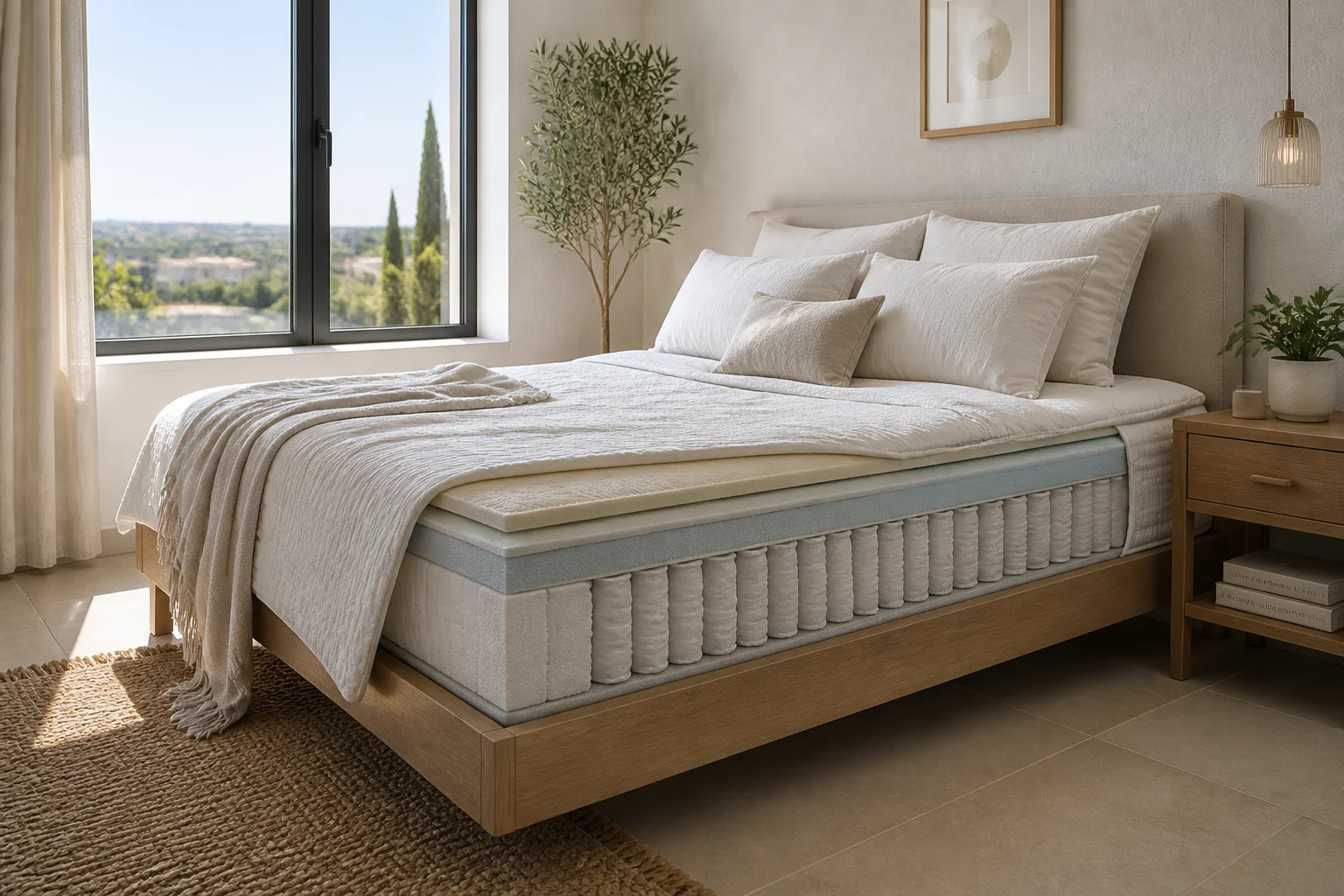
Are you torn between Polygav Aminach mattresses (Lotus, Chamomile, Hadas, Haraduf, Rotem)? Here’s how to translate the feeling of lying down, support, motion isolation, and maintenance routine into an accurate choice based on your body and usage.
What are you really looking for when you say “Polygav Aminach mattresses”?
When you’re looking for Polygav Aminach mattresses—Lotus, Chamomile, Hadas, Haraduf, or Rotem—you’re usually not looking for “just another mattress.” You’re looking for a fit: a pleasant lying down experience, stable support over time, and a choice that matches how you actually sleep (side/back/stomach), your weight, and specific sensitivities like lower back or shoulders.
The challenge is that the names sound similar, but the differences between the models are exactly what you feel at night: whether there are springs or not, how much you “sink” into the comfort layer, how the mattress behaves in couple sleeping, and whether it’s a One Side System that makes maintenance easier.
3 Questions to Organize Your Choice in 2 Minutes
Before diving into each model, we recommend answering three questions. They will quickly guide you to the right path.
- How do you sleep most of the time? On your side, on your back, a combination, or on your stomach.
- What feeling do you prefer? More enveloping and softer (light sinking), or stable and supportive (less sinking).
- What is the nature of use? Everyday sleeping, couple sleeping with movements, or occasional use/guest room.
If you sleep on your side—you’ll usually prefer a comfort layer that allows your shoulder and hips to “sink in” without distorting your back. If you sleep on your back—stable central support is important to maintain a balanced body line. If you’re a couple—motion isolation and edge support can make the experience quieter.
Important Terms in the Polygav Series (Simply)
One Side System
A one-sided mattress is designed so that there’s no need to flip it. This is convenient for maintenance, makes daily use easier, and reduces “fiddling” over the years—but it’s still important to rotate head-to-foot occasionally to balance loads.
Pillow Top / Grand Pillow Top
This is an upper comfort layer, usually thicker and more luxurious. It affects the feeling of “first softness” when lying down, and pressure distribution in areas like shoulders and hips. Those who prefer an enveloping feel will likely favor a noticeable Pillow Top.
Visco / ViscoGel
Visco is a material that molds to the body. ViscoGel adds a slightly “airier/cooler” feel compared to classic visco, and sometimes feels less “sticky.” In practice—this affects the degree of sinking and hugging.
Latex
Latex generally feels more springy-elastic: less deep sinking, more “gentle push” back. Those who change positions at night or don’t like a strong sinking feeling may prefer latex.
Springs (including Millennium 3000 springs)
A spring mattress can feel more “supportive” and stable, especially in the center. In models with an advanced spring system and edge support, couple sleeping and getting out of bed feel more stable.
The right choice in Polygav Aminach mattresses is a simple translation of your body and usage: sleeping position, desired sinking feeling, and couple quietness—then matching to a model that provides that in practice.
Roadmap by Need: Which Model is Right for Whom?
Here we organize according to usage profile and feel. The goal: for you to finish this section with 1–2 reasonable models, instead of five that confuse.
For Those Torn Between “No Springs” and “Springs”
- Want a more uniform and quieter feel? You’ll usually look at models without springs (latex/visco/viscogel + polyurethane).
- Want emphasized stability and noticeable support in the center? Sometimes a model with springs may suit better, especially for those who feel sinking in the hip area in too soft mattresses.
For Side Sleepers (Sensitive Shoulders/Hips)
Side sleepers need a comfort layer that accommodates the shoulder and hips, but still supports the waist. Here, we usually prefer a noticeable Pillow Top and a combination of materials that distribute pressure. If this sounds like you, it’s recommended to also read the dedicated guide: Sleeping on the side and experiencing shoulder pain? Here’s how to choose an Aminach mattress.
For Back Sleepers (Sensitive Lower Back)
When sleeping on your back, we seek balance: not too hard (which can create pressure), and not too soft (which can cause sinking). If you’re debating about firmness, we have a guide that translates this into practice: Firm or medium-soft mattress for lower back pain? Here’s how to choose correctly.
For Couple Sleeping (Motion Isolation and Edge Support)
If one of you moves a lot at night, or if you get up at different times—pay attention to two things: (1) motion isolation, (2) edge support that prevents a “falling” feeling when sleeping close to the edges. In certain models in the series, both edge support and central support for stability are emphasized.
Practical Comparison Between Lotus, Chamomile, Rotem, Hadas, and Haraduf
To avoid turning this into a dry specification table, we focus on what you feel: core type (springs/no springs), nature of the comfort layer (latex/visco/viscogel), and support feeling.
Lotus: No Springs, Latex + Polyurethane, Pillow Top, One-Sided
Aminach Mattress Model Lotus from the Polygav Series is a good direction for those who prefer a mattress without springs with a relatively elastic feel thanks to latex, combined with a luxurious comfort layer (Pillow Top). One-sided means less ongoing maintenance.
Who will find this suitable? Those who enjoy a “springy-elastic” support feel and not too deep sinking, as well as those who change positions and want to feel the mattress “helping” in movement.
Chamomile: No Springs, Combination of Visco and Latex, Thick Pillow Top
Aminach Mattress Model Chamomile from the Polygav Series is suitable for those looking for a combination of visco hugging and latex elasticity, with a thick Pillow Top that emphasizes the initial comfort feeling. This can be a good solution for side sleepers who want pleasant pressure distribution, without completely giving up on the “return” of latex.
Selection Tip: If you prefer a more enveloping feel rather than a “held” one, Chamomile may be a strong direction—especially when the comfort layer is a central part of the decision.
Rotem: No Springs, ViscoGel + Polyurethane, Pillow Top, One-Sided
Aminach Mattress Model Rotem from the Polygav Series is an option for those looking for a mattress without springs with an emphasis on ViscoGel—usually a feeling of body adaptation with a “pleasant” comfort and less heating compared to basic visco (the actual feel also depends on bedding and room ventilation). Here too, the One Side System makes maintenance easier.
Who is this especially suitable for? Those who love the feel of visco/memory but want a slightly more “balanced” direction, along with a rich comfort layer.
Hadas: Orthopedic Springs, Hybrid Core of ViscoGel + Poly
Aminach Mattress Model Hadas from the Polygav Series is aimed at those who prefer the stability of springs but don’t want to give up on a modern comfort layer (hybrid core with ViscoGel/Poly). In simple terms: more “supportive skeleton,” with a comfort layer that softens the touch.
When is this the smart choice? When you feel that in mattresses without springs you sink too much in the hip area, or when overall stability is important to you—especially when sleeping on your back or in couple sleeping.
Haraduf: Millennium 3000 Springs, Enhanced Support Center and Edge Support
Aminach Mattress Model Haraduf from the Polygav Series is a model with a clear emphasis on an advanced spring system, support center for stability, and enhanced edge support. If you sleep as a couple, enjoy feeling a “stable mattress,” and don’t want the edges to be too soft—this is a direction worth checking out.
Bottom Line: Haraduf is likely to suit those who prefer emphasized support and a stable structure, especially when couple sleeping and edge support are part of the consideration.
How to Choose Based on Weight and Body Structure (Without Confusing Numbers)
We don’t need to get into formulas to make a good decision. It’s enough to understand the principle: the higher the load on the mattress, the more important it is for the core to provide stability and for the comfort layer not to be “too deep” relative to support.
- Light-Medium Body Structure: You may sometimes feel more comfortable in models with a luxurious comfort layer (Pillow Top) and materials that adapt to the body (visco/latex), as the body “manages” to activate the upper layer.
- Medium-Heavy Body Structure: You may sometimes prefer a model that feels more held and stable, to reduce sinking in the hip area and maintain a balanced sleep line—sometimes springs or a firmer core will do the job.
- Significant Weight Difference Between Partners: Pay special attention to motion isolation and the feeling of support in the center. In such cases, a more stable model can feel “fairer” for both sides.
Common Mistakes in Choosing a Polygav Aminach Mattress (And How to Avoid Them)
1) Choosing “the firmest” thinking it’s always good for the back
Firmness can help when support is needed, but excessive firmness can create pressure points (especially in the shoulders and hips). Instead of choosing firmness as a slogan, choose based on balance: core support + sufficient comfort for the joints.
2) Ignoring Maintenance and Protection Routine
Even the right mattress can wear out quickly if it absorbs moisture, sweat, and stains. The simple way to extend its life is good protection from the very beginning—such as with Aminach Mattress Protector that protects against liquids and stains, and makes hygiene easier.
If you want to establish a proper cleaning and protection routine, it’s recommended to read: How to Keep a New Mattress: Proper Cleaning and Protection with a Mattress Protector.
3) Choosing by model name only and not by feel
In this series, the real difference is “what’s inside” and how it feels: latex versus visco/viscogel, springs versus no springs, and additions like edge support or central support. Therefore, we recommend narrowing down to 2 models and then comparing based on feel and priorities.
What About Price, Warranty, and Height? How to Approach This Correctly
At the commercial stage of the search, it’s natural to check price and warranty—but it’s important not to make this the only criterion. An external source presenting data, for example, on Aminach mattresses from Polygav indicates height 28 cm and warranty 8 years for a model appearing on the relevant page, alongside a listed price.
For reading and comparing against what you see on the model pages: Aminach Mattresses - Manufacturer: Polygav - Lian Sleep.
How to use this correctly? As a “feasibility check” only: if you need a specific height (for a high/low bed, or for easy getting up), or if warranty is a central consideration—check the data on the specific model page you’re considering, and then return to the truly important criteria: support, feel, and couple sleeping.
Summary: How to Settle on One Model Without Confusion
To choose correctly among Polygav Aminach mattresses (Lotus, Chamomile, Hadas, Haraduf, Rotem), we suggest a short process:
- Step 1: Determine your dominant sleeping position (side/back/combination) and desired feel (enveloping/stable).
- Step 2: Decide if you want springs (emphasized stability) or no springs (more uniform and quieter feel).
- Step 3: Narrow down to 2 models: for example, Lotus/Chamomile/Rotem for no springs, or Hadas/Haraduf for springs.
- Step 4: In couple sleeping—give weight to edge support and stability feel.
- Step 5: Don’t forget protection: a good mattress protector is part of the choice, not an addition.
If you’d like, write to us how you sleep (side/back), what your weight is approximately, and whether it’s couple sleeping with movements—and we can focus you between Lotus, Chamomile, Rotem, Hadas or Haraduf according to true priorities—and not based on surrounding noise.

